

Research
We investigate how translational control shapes immune cell function and how defects in the protein synthesis machinery cause human disease. Our work combines biochemistry, genomics, and human genetics to understand translation at the molecular, cellular, and organismal level.
 © Jan Greune
 Protein synthesis is a fundamental cellular process, yet its regulation is remarkably context-dependent. Immune cells face unique translational challenges: they must rapidly reprogram their proteomes upon activation, sustain intense biosynthetic activity during clonal expansion, and fine-tune effector molecule production. We seek to understand how translational control mechanisms orchestrate these processes—and what goes wrong in disease.
Translational Regulation in T Cells
Pillar 1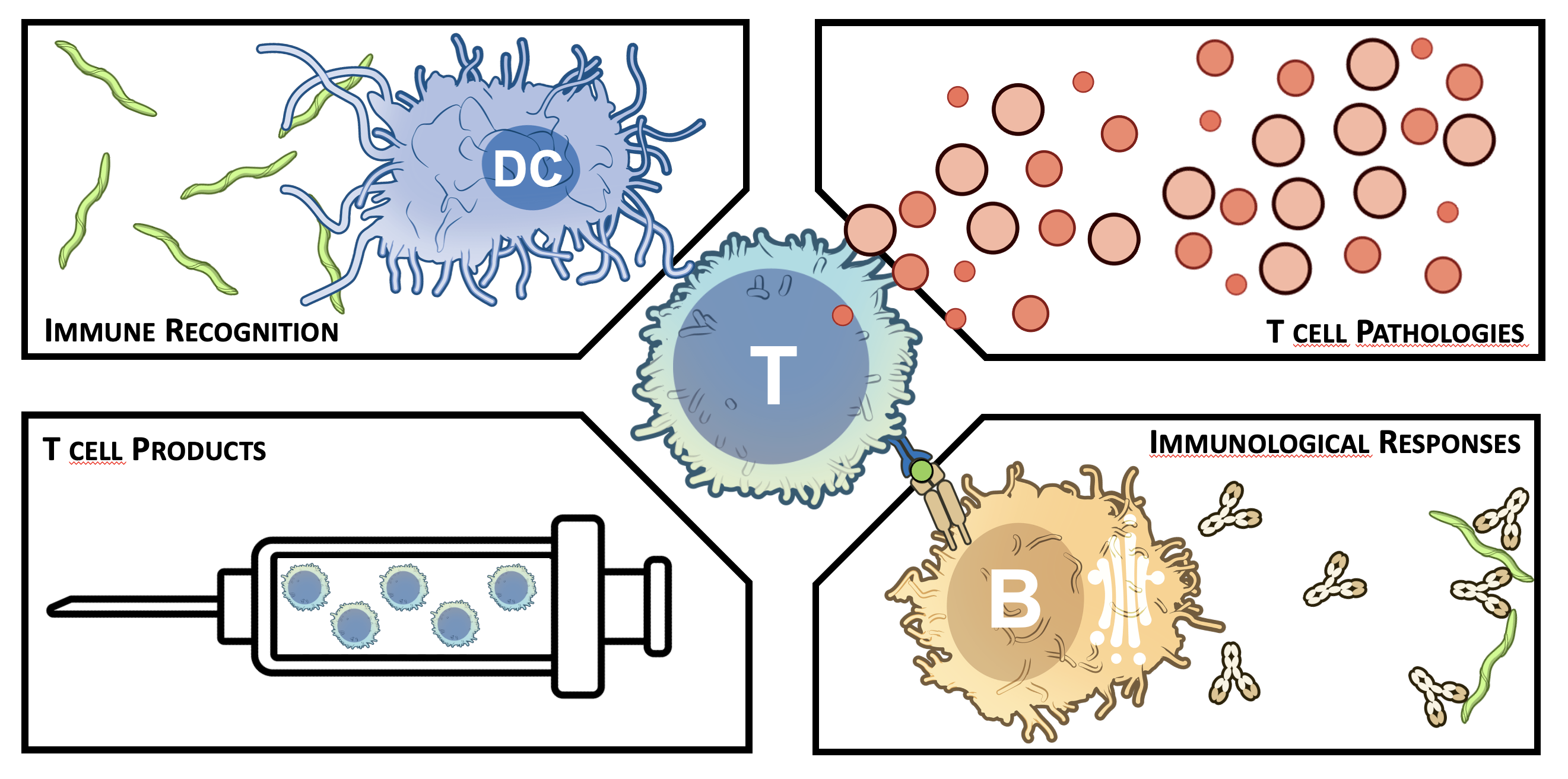
T lymphocytes undergo dramatic changes upon antigen recognition: within hours, a quiescent cell transforms into a biosynthetic powerhouse. This process requires coordinated reprogramming of mRNA translation, yet the mechanisms remain poorly understood.
Key Questions
- How do upstream open reading frames (uORFs) regulate immune gene expression?
- What role do translation initiation factors play in T cell activation and differentiation?
- How is translational control integrated with transcriptional and metabolic reprogramming?
- Can targeting translation pathways modulate immune responses therapeutically?
Approaches
We use ribosome profiling, selective 40S footprinting, and CRISPR screens to dissect translational control in primary human T cells.
Ribosomopathies & Immunodeficiency
Pillar 2Ribosomopathies—diseases caused by mutations in ribosomal proteins or assembly factors—often manifest with selective tissue defects despite ribosomes being required in every cell. Intriguingly, immunodeficiency is a common feature of several ribosomopathies, suggesting immune cells are particularly vulnerable to translational stress.
Key Questions
- Why are immune cells selectively affected in ribosomopathies?
- How do ribosome biogenesis defects alter the immune cell proteome?
- Can we identify therapeutic targets to restore immune function in these patients?
- What do ribosomopathies teach us about normal immune cell translation?
Approaches
We study patient-derived cells and mouse models carrying ribosomopathy-associated mutations, combining proteomics, ribosome profiling, and functional assays.
tRNA Metabolism & Autoinflammation
Pillar 3Transfer RNAs are essential adaptors in protein synthesis, yet mutations affecting tRNA biogenesis and modification cause a surprising spectrum of human diseases—including autoinflammatory syndromes. We investigate how defects in tRNA metabolism trigger inappropriate immune activation.
Key Questions
- How do tRNA processing defects activate innate immune sensing pathways?
- What is the role of tRNA modifications in immune cell function?
- Can codon-biased translation explain tissue selectivity in tRNA-related diseases?
- How does amino acid availability impact tRNA charging and immune responses?
Approaches
We combine tRNA sequencing, codon-resolution ribosome profiling, and genetic perturbation to understand how tRNA metabolism shapes the immune cell proteome.
Our Toolkit
We develop and apply cutting-edge methods to study translation with unprecedented resolution.
Ribosome Profiling
Genome-wide snapshots of translation
Selective 40S Footprinting
Tracking scanning ribosomes
CRISPR Screens
Functional genomics in primary cells
Patient-Derived Models
Human disease in the dish